Wood Flooring Grades Explained: A–F Guide for Buyers
Wood Flooring Grades Explained: What Every B2B Buyer Should Know
Grade is the biggest hidden variable in wood flooring pricing. Two suppliers quote the same species and size, yet prices differ by 30–50%. Most of that gap is not quality — it is grade. For distributors, contractors and project buyers, understanding grades is the difference between paying a premium for an appearance you do not need, and receiving a floor that fails to match what your client expects. This guide explains what wood flooring grades are, how the A–F grading system works, what drives a grade, and how to choose the right grade for every project type.
What Are Wood Flooring Grades?
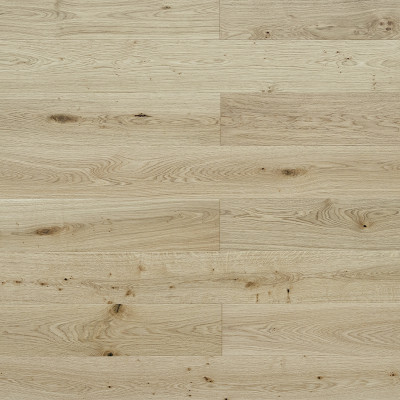
Wood is a natural material: every tree, every log and every plank is different. Grades are a set of rules that classify the visual character of a plank — color uniformity, knots, mineral streaks, sapwood and other natural features. Grading lets buyers order "natural wood" with predictable expectations. A floor graded A will look clean and uniform; a floor graded C will show more natural character. Both are structurally sound — the grade describes appearance, not strength.
Different markets use different conventions (Select / #1 Common / #2 Common in North America, A/B/C in parts of Europe), which makes comparing quotes across suppliers confusing. That is why AMUER uses a single transparent A–F system across all its engineered hardwood collections — one chart, one language, no guesswork.
The A–F Grading System at a Glance
| Grade | Appearance | Best For | Typical Cost Level |
|---|---|---|---|
| A | Nearly uniform color; minimal knots | Luxury hotels, showrooms, premium residences | High |
| B | Slight color variation; small, tight knots | Business hotels, offices, upscale apartments | Moderate |
| C | Natural color variation; visible knots | Rental apartments, retail, cost-conscious projects | Lower |
| D | Rustic character; frequent knots and streaks | Commercial spaces, rustic design, large-volume fit-outs | Low |
| E–F | Full natural features; bold, live character | High-volume projects, rustic styles, decorative accents | Lowest |
Grades A to F describe a spectrum from "cleanest look" to "most natural character." Because the rules are fixed in advance, every AMUER shipment gives the same predictable appearance — the same grade looks the same whether it ships from our Dalian or Serbia factory.
What Determines a Flooring Grade?
When a log is sawn into planks, each plank is sorted by a grader against a fixed checklist:
- Color uniformity — how consistent the tone is across the plank and across the batch;
- Knots — count, size, and whether they are tight (solid) or open (dead) knots;
- Mineral streaks and grain — dark lines and pronounced grain that add character but reduce uniformity;
- Sapwood vs. heartwood — the proportion of lighter outer wood to the deeper-colored core;
- Other natural features — pinholes and resin pockets, which are typically filled and sanded smooth.
The grade mix of a batch directly determines its yield — the usable area recovered from each cubic meter of raw lumber. Higher yields mean lower cost, which is exactly why grade is the largest single price driver in wood flooring.
How to Choose the Right Grade for Your Project
There is no "best grade" — only the right grade for the end use. Start from the finished look your client expects, then work backwards to the grade:
- Luxury hotels, showrooms, premium residences → Grade A. The floor is part of the brand image; consistency matters more than cost.
- Business hotels, offices, upper-mid apartments → Grade B. A clean, professional look at a sensible budget.
- Rental apartments, retail, large residential developments → Grade C. Natural character is acceptable, and the savings multiply across thousands of square meters.
- Rustic design, high-traffic commercial, volume fit-outs → Grades D–F. Bold character hides daily wear remarkably well.
A common cost strategy among experienced project buyers: Grade A or B for public areas, Grade C for guest rooms and rental units. The public floor makes the impression; the room floors control the budget.
Grade vs. Quality: Two Dimensions Buyers Must Separate
The most expensive mistake in B2B flooring buying is confusing grade with quality.
- Grade describes appearance — how clean or rustic the surface looks.
- Quality describes construction — the core material, adhesive, wear layer, locking system and dimensional stability.
A low grade is not a bad floor. A poorly constructed floor is a bad floor, regardless of grade. Before comparing grades, verify the construction: what is the core made of, what is the wear layer thickness, what certifications back the product (CE, CARB Phase 2, FSC, ISO 9001)? At AMUER, the same engineered construction is available across the full A–F range — buyers choose the appearance, not the durability.
Frequently Asked Questions
Q1: What is the best wood flooring grade?
There is no absolute "best" grade — it depends on the project. Grade A gives the cleanest look at the highest price; Grades C–D offer the best value where natural character is acceptable. Define your installation's visual requirement first, then choose.
Q2: Is a higher grade always better?
No. A higher grade means a cleaner appearance and a higher price. For rental units and volume projects, paying for Grade A uniformity is simply overspending.
Q3: Does grade affect durability?
No. Durability is determined by the construction — core stability, adhesive bond and wear layer — not by the grade. Two floors of identical construction have identical durability even at different grades.
Q4: How much does grade affect price?
Within the same factory and size, Grade A can cost 20–40% more than Grade C. The gap varies by species, specification and supplier, which is why transparent grade rules are essential when comparing quotes.
Q5: Can different grades be mixed in one project?
Yes, and it is a common cost-saving strategy — public areas in Grades A/B, rooms in Grade C. Just confirm the color tones are compatible before ordering.
Q6: How can a B2B buyer verify a supplier's grade claims?
Ask for the written grading standard, real batch photos or videos (not retouched marketing shots), third-party pre-shipment inspection, and physical samples before bulk order. A supplier with a fixed, published grading chart — like the AMUER A–F system — is far easier to audit than one with vague "premium" labels.
Ready to Compare Grades in Person?
See the difference with your own eyes. Explore the full AMUER engineered hardwood collection — long plank, wide plank, herringbone, chevron and parquet — and compare how each grade performs across projects.
Explore the Engineered Hardwood Collection →Request the complete A–F grade chart with real plank photos and free samples. Our export team will send a physical sample board set so you can verify color, grain and surface quality before you commit.
Request Grade Chart & Free Samples →